

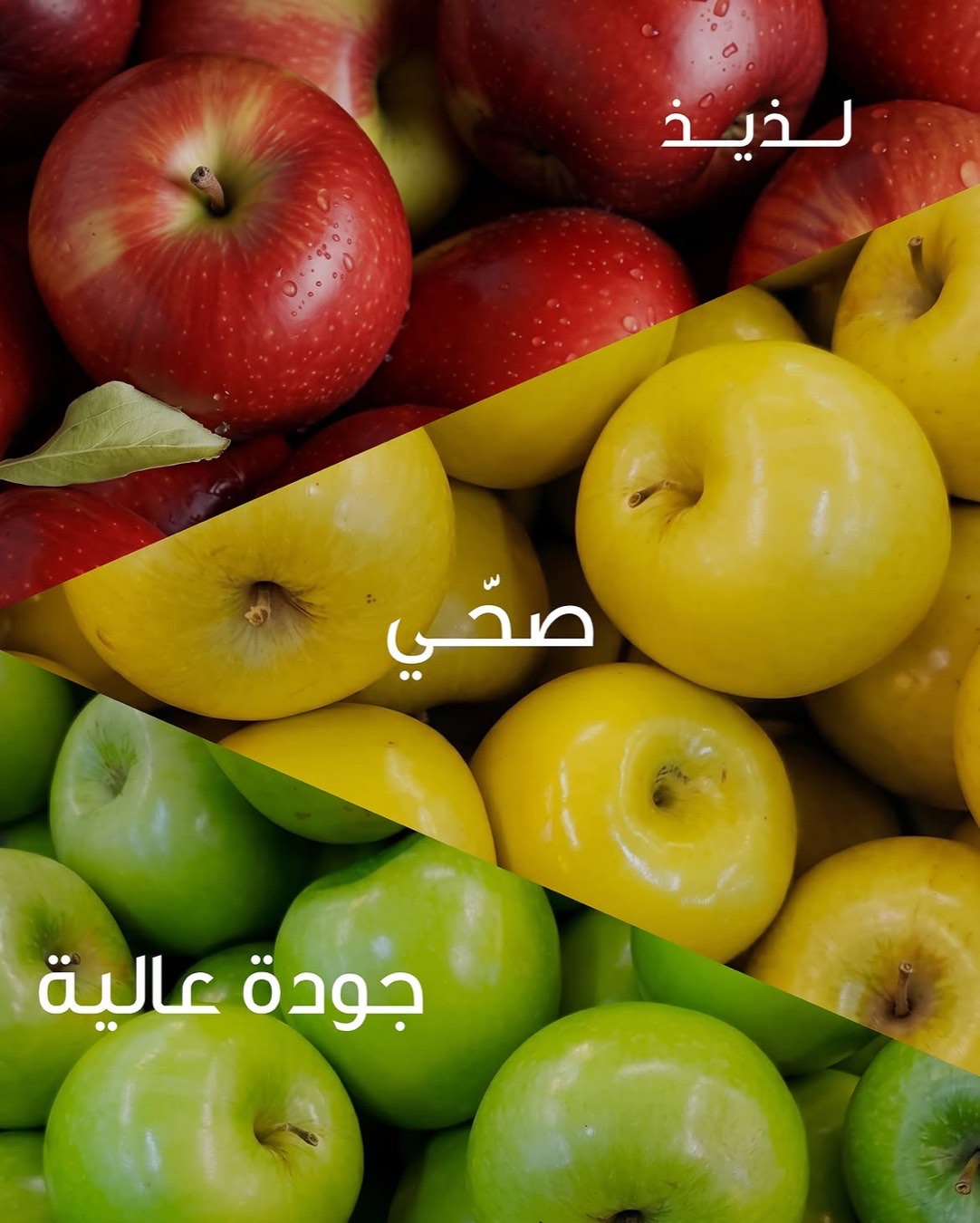
Most brands in Kuwait post one caption and run it through a translator. You can tell immediately. The English reads like a brochure and the Arabic reads like it was written by someone who has never ordered food here.
We write both. Not the same sentence in two languages — two different sentences, each written for the person who will actually read it.
The same shoot, two different jobs
Take a grocer. In Arabic, the job is reassurance: what you want is here, the quality is good, and the trip is worth it. So the caption sounds like someone telling you across the counter.
بالجملة او بالكيلو، مستورد او محلي، في ذا فارم اللي تبونه تحصلونه
Wholesale or by the kilo, imported or local — at The Farm you'll find what you're after.
That line works because it is how people speak. Nobody says "a comprehensive selection catering to diverse requirements." They say: whatever you want, we have it.
Now take a concept store. Different audience, different job. The work is not reassurance, it is curiosity. So the English gets shorter, and it leaves a gap for you to fill.
Not new. Not forgotten. Just back in focus.
The eye moves before the answer appears.
A caption is not a description of the picture. It is the second half of it.
What changes when you write twice
Three things, in our experience.
The Arabic stops sounding foreign. Translated Arabic uses formal structures nobody uses in a caption. Written Arabic — actually written, by someone who speaks it — uses the dialect, the small words, the emoji in the right place.
The English gets shorter. When you are not carrying a translation, you can cut. Most of our strongest English captions are under ten words.
You stop posting one thing to two audiences. A caption written for everyone lands with no one. Two captions can take two angles on the same shoot, and both can be good.
How we do it
One writer drafts in Arabic, one in English, from the same brief and the same images. Neither sees the other's version first. Then we read both out loud. If either one sounds like a press release, it goes back.
It costs a little more time per post. It is the difference between a feed that sounds like a brand and a feed that sounds like a person.